
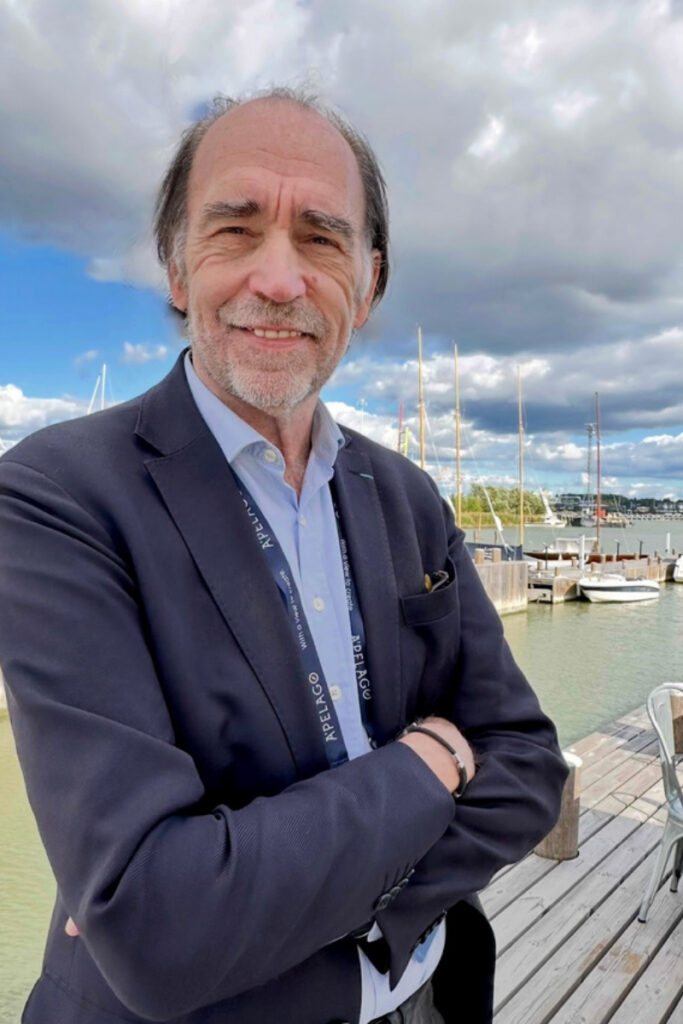
Dr Philippe Metzger, Director and General Manager in France for OliOil Ltd sees the necessity of revising MARPOL convention to protect the maritime environment. Although the global economy depends on maritime transport, not enough has been done so far to secure the seas from spillages of oil.
 The International Convention for the Prevention of Pollution from Ships (MARPOL) is the main international convention covering prevention of pollution of the marine environment by ships from operational or accidental causes. The 1992 amendments made it mandatory for new oil tankers to have double hulls and brought in a phase-in schedule for existing tankers to fit double hulls, which was revised in 2001 and 2003.
The introduction of double hulls has reduced the large oil spills from tankers dramatically compared to past decades. Still, last year the total volume of oil lost to the environment from tanker spills was approximately 10,000 tonnes globally according to International Tanker Owners Pollution Federation Limited (ITOPF). Dr Philippe Metzger says the situation must be changed.
«It's clear MARPOL needs to be updated. It needs a new amendment, which would make it mandatory for tankers and cargo ships to have an automated oil spill response system onboard», Metzger says.
That, he says, is one of his goals as a new director for OliOil Ltd, a fast response startup company for Blue Tech developing an instant oil spill response system.
For the future of humanity
A personal experience has shaped Dr Metzger's thinking of maritime environment conservation. In March 1978 He was 20 years old and preparing for an entrance exam to the Naval Academy in France. One morning he woke up to a disgusting smell of petrol. First, he thought the heating system of the house had broken down, but soon he realized it was impossible to avoid the overwhelming stink in the coastal town of Brest, in western France. He came to know it was a crude oil carrier Amoco Cadiz, which had run aground off the coast of Brittany on the other side of the peninsula.
«To think the stink came all the way from the sea and over the land», he remembers.
Amoco Cadiz came to be one of the largest oil spills in history. The tanker leaked some 68,7 million gallons of oil covering an area of 29×129 kilometers severely damaging the maritime environment and the livelihoods of people living in the area. After lengthy trials Amoco Oil Corporation agreed in 1992 to pay 230 million dollars in fines, more than half a billion dollars in current value.
«This experience is one of the reasons why I'm investing my time in OliOil. The maritime industry must have better means to secure the environment in which we operate. The future of the sea is the future of humanity », he says.
Dr Metzger will be stationed in Paris. France's maritime spaces, of a total area of around 10.7 million km², represent the world's second largest maritime space after that of the United States due to its overseas departments and regions. France has taken significant moves towards sustainable shipping. The France 2030 program launched in 2021 is a €54 billion investment plan intended to enable France to catch up with its industrial competitors, make massive investments in new technologies and finance the ecological transition. Decarbonization strategy, “France-Mer 2030,” backed by a substantial €300 million public investment.
Long experience in maritime affairs
Dr Philippe Metzger has a long career as an officer in the French Navy. He's a commander in the reserve. He was responsible for maritime economics and international relations issues related to maritime law, piracy, trafficking, rescue, pollution, maritime safety, etc. He had missions in Libya, Tunisia, Azerbaijan, Cameroon, Uganda, Canada, and Netherlands. He had missions in Libya, Tunisia, Azerbaijan, Cameroon, Uganda, Canada, and the Netherlands.
Before starting in a position as a General Manager in France for OliOil, he has been working with maritime economic issues within a department of the Prime Minister of France as an intermediary between French economic actors in the maritime sector and public authorities. He has also been working as a consultant on maritime issues.
«I have salt water running in my veins. You know, I used to work onboard a 150 meter long frigate. At the bridge I could feel the metal vibrating under my feet when we were moving along. The ship used to be an extension of myself», he smiles.
Focus on maritime oil spillage pollution
The EU aims to achieve zero water pollution by 2030. The Commission's 2023 impact assessment on amending the ship-source pollution Directive reported that although maritime accidents were a prominent source of ship-source pollution, the majority of oil spill pollution came from deliberate discharges, such as tank-cleaning operations and waste discharges. The impact assessment also pointed to large gaps in information on ship-source oil pollution across the EU.
In Europe there is a higher detection of possible oil spills in the North Sea and Mediterranean Sea compared to other areas due to high traffic, which increases the likelihood of illegal discharges and accidents. By European Maritime Transport Environmental Report 2025, in 2023 the average number of possible pollution incident detections increased by more than 58% compared to 2022. The more extensive use of higher spatial resolution imagery from commercial satellite missions has enhanced capability to identify even smaller spills.
Contact us:
Dr Philippe Metzger, Director, General Manager France - Partner OliOil Ltd
+33 6 37 68 93 33 philippe.metzger@olioil.io
www.olioil.io

 English
  French